
Selling real estate to NRIs is no longer a matter of waiting for a buyer to visit India during a holiday. Many NRI buyers now shortlist homes from Dubai, Singapore, London, Toronto, Sydney, and New York before speaking to a sales team. They compare locations, check builder credibility, study rental demand, and speak to family in India, often across several weeks.
That shift has changed how real estate sales works. A strong NRI strategy needs trust, timing, clear information, and follow-up that respects distance. LinkedIn and Google Search Ads sit at the centre of this change because they reach buyers at two different moments.
Google Search Ads capture intent when someone is already looking for “flats in Mumbai for NRI investment” or “RERA approved villas in Bengaluru”. LinkedIn helps real estate brands build trust with high-income professionals, founders, senior managers, doctors, consultants, and investors who may not be actively searching yet.
Used together, they create a strong path from awareness to enquiry to site visit or virtual walkthrough.
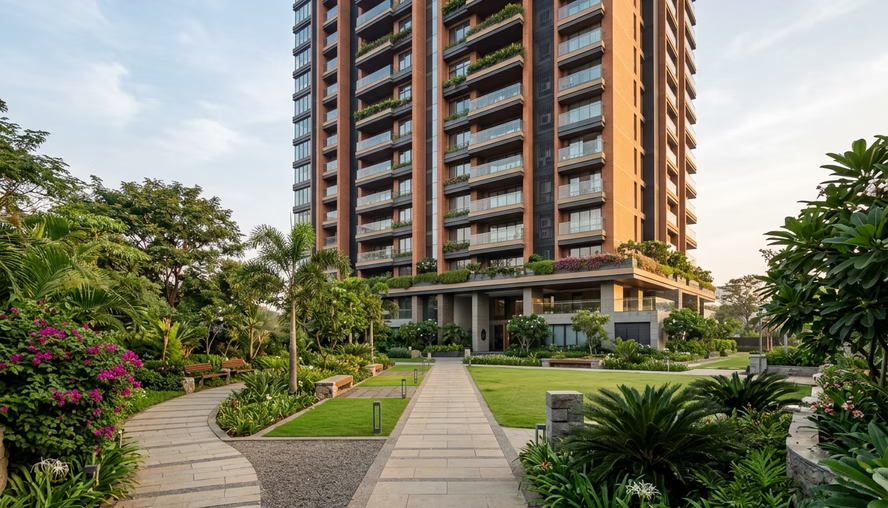
NRI buyers often judge a project by clarity, credibility, and location context long before a visit.
Why NRI real estate sales need a different approach
NRI buyers carry a different set of concerns from local buyers. The sales journey is longer, more document-heavy, and trust-led. A local buyer may visit the site multiple times. An NRI buyer may depend on:
- Video calls and virtual tours
- Family visits on their behalf
- RERA details and legal checks
- Builder track record
- Payment schedules from overseas accounts
- Rental or resale potential
- Clear answers on taxation, repatriation, and home loan process
This means the ad cannot only say “luxury 3 BHK near metro”. It must answer the quiet question behind the click: Can I trust this project and this team from another country?
That is why modern real estate sales strategies for NRIs using LinkedIn and Google Ads should focus on education as much as enquiry generation. A campaign that pushes only offers may attract clicks, but it rarely builds confidence. A campaign that explains location benefits, project approvals, ownership process, and after-sales support gives serious buyers a reason to continue the conversation.
The sales team also needs to adjust. NRIs often respond outside Indian working hours. They may prefer WhatsApp, email summaries, or scheduled video consultations. They may need documents shared in an organised way, not scattered across multiple messages. Speed matters, but structure matters more.
How LinkedIn reaches high-intent NRI audiences before they search
LinkedIn works well for NRI real estate because it is built around professional identity. Many NRI property buyers are established professionals who think of Indian real estate as a family asset, retirement plan, investment, or future relocation option. LinkedIn allows real estate brands to reach these segments with context.
A project in Pune, Gurugram, Hyderabad, Bengaluru, Mumbai, Chennai, or Kochi can build campaigns around audience traits such as location, industry, seniority, job function, education, and company type. For example, a premium residential project may speak to Indian-origin technology leaders in the US, finance professionals in the UAE, or healthcare professionals in the UK.
The key is not to sound like a generic property ad. LinkedIn users respond better to content that feels useful and credible.
What works well on LinkedIn
Strong LinkedIn campaigns for NRI real estate often use content such as:
- Market explainers on a specific micro-market
- Short posts about RERA, possession timelines, and due diligence
- Video walkthroughs with clear captions
- Founder or director messages about project philosophy
- Carousel posts explaining the buying process for NRIs
- Client stories where privacy is protected
- Invitations to online property consultations
A useful LinkedIn ad might lead with a point of clarity:
“Planning to buy a home in Bengaluru while living abroad? Here is what to check before shortlisting a project.”
That message asks for attention before asking for contact details. It respects the buyer’s research stage.
How to make LinkedIn ads more engaging
Good LinkedIn ad content should be simple, specific, and reassuring.
Use a headline that speaks to a real need. “Luxury Homes in Hyderabad” is broad. “RERA-registered homes near Hyderabad’s financial district for overseas Indian buyers” is stronger because it gives context.
Use a short visual or video that shows the property honestly. Avoid over-edited clips that hide the actual site, approach road, room size, or surrounding area. NRIs spot vague marketing fast because they compare many projects online.
The landing page should continue the promise made in the ad. If the ad mentions NRI assistance, the page should include:
- Project approvals and RERA number, where applicable
- Location map and travel times
- Floor plans and unit sizes
- Payment plan
- Possession status
- Home loan support
- Video tour request option
- Time-zone friendly consultation slots
LinkedIn also supports remarketing. If someone watches a project video or visits the website, the next ad can invite them to book a virtual tour. This creates a natural sequence rather than repeating the same enquiry form again and again.
Why Google Search Ads capture buyers at the moment of intent
Google Search Ads work differently. They meet the buyer when the buyer already has a need. Someone searching for “NRI property investment in India” or “apartments in Kochi for NRIs” is much closer to action than someone casually browsing social media.
This is why Search Ads often form the performance backbone of an NRI campaign. They help real estate teams capture demand across cities, countries, and time zones.
A good Google Search campaign does not target every possible property term. It separates intent.
Useful keyword groups for NRI campaigns
Search terms can be grouped by buyer stage:
| Buyer stage | Search behaviour | Campaign focus |
|---|---|---|
| Early research | “best cities in India for NRI property investment” | Guides, market notes, consultation |
| Location shortlisting | “flats in Pune near Hinjewadi” | Project benefits, connectivity, pricing range |
| Trust checking | “RERA approved projects in Mumbai” | Approvals, builder credentials, documents |
| Purchase support | “NRI home loan for property in India” | Financing help, process explanation |
| Urgent enquiry | “ready to move flats in Bengaluru” | Site visit, virtual tour, availability |
This structure helps sales teams match the ad and landing page to the buyer’s mindset.
How to write better Search Ads for NRIs
Google Search Ads have limited space, so each word must do a job. Strong ads usually include the project location, buyer relevance, trust marker, and next step.
Headline ideas:
- RERA-Registered Homes in Pune
- NRI Property Assistance Available
- Book a Virtual Site Tour
- Ready and Under-Construction Options
- Homes Near Key Business Hubs
Description ideas:
- Explore spacious apartments with video walkthroughs, payment details, and NRI purchase support.
- Speak with a property advisor at a time that suits your country of residence.
- Get project details, floor plans, and documents before planning a visit to India.
The landing page should load fast and work well on mobile. Many NRIs will click from a phone between work hours, during a commute, or late at night. A slow page loses serious buyers.
Campaign improvement should also include negative keywords. Terms such as “jobs”, “rent free”, “cheap hostel”, or unrelated city names can waste spend. Search term reviews help remove poor traffic and protect the budget.
Call extensions and lead forms can help, but they should not replace a good website experience. For high-ticket real estate, buyers usually want proof before they share details.

Clear property context helps remote buyers imagine the location and daily life around a home.
How to connect ads, content, and sales follow-up
LinkedIn and Google Ads can generate attention. Sales conversion depends on what happens next.
NRI real estate enquiries often fail because of poor handover. A person clicks an ad, fills a form, receives a delayed call at the wrong hour, then gets a generic brochure. That experience weakens trust.
A better system treats every enquiry as a remote advisory conversation.
Build landing pages for trust
A high-performing NRI landing page should answer practical questions upfront. It should not hide important details behind a form.
Include:
- Clear project name and location
- RERA registration details, if applicable
- Construction and possession status
- Unit types and carpet area
- Indicative price band, where possible
- Payment schedule
- Stamp duty and registration guidance
- NRI documentation checklist
- Virtual tour booking
- WhatsApp and email options
- Customer support after booking
If price cannot be published due to project rules or changing inventory, say so clearly and offer a consultation. Vague “price on request” pages can still work, but only when the rest of the page builds enough confidence.
Use social media for networking, not just posting
Social media helps most when it creates relationships. LinkedIn is especially useful for connecting with NRI associations, alumni groups, Indian business communities abroad, and professionals who influence buying decisions.
Real estate leaders can build credibility by posting consistently on topics such as:
- Infrastructure updates that affect a project location
- NRI buying process explained in plain language
- Common mistakes in remote property purchase
- How virtual site visits work
- What documents to check before booking
- Differences between ready-to-move and under-construction properties
Personal profiles often perform better than brand pages because people trust people. A sales head, founder, or NRI desk lead can share short, useful posts without sounding promotional. Over time, these posts support paid campaigns because prospects recognise the people behind the project.
WhatsApp and email also matter. After an enquiry, send a clean summary instead of a flood of images. A good first response might include:
- A short acknowledgement
- Project brochure link
- Floor plan link
- RERA details
- Video walkthrough
- Available time slots for a call
- Name and number of one dedicated contact person
This removes confusion and signals professionalism.
Improve campaigns with real sales feedback
Ad platforms show clicks, leads, and cost per enquiry. Sales teams know lead quality. Both sides must talk.
A campaign receiving many low-quality leads may have a keyword problem, ad copy problem, or landing page mismatch. A campaign with fewer leads but more serious conversations may deserve more budget.
Track simple lead stages:
- New enquiry
- Contacted
- Qualified
- Virtual tour booked
- Site visit by family
- Negotiation
- Booking
When these stages flow back into campaign decisions, media spend becomes smarter. The goal is not the cheapest lead. The goal is the best path to a serious buyer.
What success looks like in practice
Real estate brands do not need a massive budget to make this method work. They need clear positioning, patient follow-up, and honest content. The examples below are illustrative, based on common campaign patterns seen in property marketing. They do not represent named companies or verified public results.
Case study one shows how LinkedIn warmed up a premium audience
A developer selling premium apartments in Bengaluru wanted to reach Indian-origin technology professionals in the US and Singapore. The project was close to a major employment corridor, but the existing ads focused only on amenities.
The team changed the campaign message. Instead of leading with clubhouse images, the LinkedIn content explained commute advantages, rental demand in the area, RERA status, and how overseas buyers could complete the first stage remotely.
They used three content types:
- A short video walkthrough of the sample flat
- A carousel explaining the NRI buying process
- A lead form offering a scheduled virtual consultation
The sales team followed up with time-zone friendly calls and a single document pack. Lead volume was not the only measure. The quality of conversations improved because prospects already understood the location and process before speaking to sales.
The lesson is clear: LinkedIn works best when the ad educates before it asks for a meeting.
Case study two shows how Google Search reduced wasted enquiries
A residential project in Kochi wanted to reach NRIs in the Gulf. The first Search campaign used broad terms such as “flats in Kerala” and “apartments in India”. It brought many enquiries, but several were from local renters, low-budget buyers, or people searching outside the project area.
The campaign was rebuilt around precise intent. Keywords included city-specific and NRI-specific terms. Ads mentioned virtual tours, project status, and assistance for overseas buyers. Negative keywords were added for rentals and unrelated locations.
The landing page was also changed. It included a map, airport connectivity, unit plans, RERA information, and a form that asked for country of residence and preferred contact time.
The result was a cleaner sales pipeline. The team spent less time filtering poor-fit enquiries and more time speaking with buyers who had a real reason to consider the project.
The lesson: Search Ads work when the campaign filters as well as attracts.
Case study three shows the power of combined channels
A developer launching villas near Hyderabad used LinkedIn for early awareness and Google Search Ads for active demand. LinkedIn posts built interest among senior professionals abroad by explaining gated community living, maintenance support, and long-term family use. Search Ads captured people looking for specific villa options near the city.
People who visited the website after LinkedIn posts later saw remarketing messages inviting them to book a weekend virtual tour. Family members in India were encouraged to attend the physical site visit while the NRI buyer joined by video call.
This joined-up approach supported a more confident buying journey. The brand did not depend on one click. It created several trust points.
The modern NRI sales playbook
The best NRI campaigns are not built around aggressive selling. They are built around clarity. A practical playbook includes:
- Use LinkedIn to reach professional and high-income NRI audiences early
- Use Google Search Ads to capture buyers with clear purchase intent
- Write ad copy that answers trust, location, and process questions
- Send traffic to landing pages that show documents, videos, maps, and next steps
- Offer virtual tours and scheduled calls across time zones
- Keep social media useful, not only promotional
- Share clean follow-up material after every enquiry
- Judge campaign quality by qualified conversations, not only lead count
Real estate is a high-trust category, especially for buyers living outside India. LinkedIn builds familiarity. Google Search captures intent. Social content supports credibility. A disciplined sales process turns interest into action.
For developers and channel partners, the next step is to audit the current buyer journey from the NRI’s point of view. Search the project, click the ad, read the landing page, fill the form, and review the follow-up. Every weak point is an opportunity to build more trust.
The brands that win NRI buyers will be the ones that make distance feel manageable, information easy to verify, and the purchase process calm from the first click.