
A buyer may spend weeks comparing a hatchback, an SUV, an electric scooter, and a premium motorcycle before ever speaking to a sales executive. By the time they walk into a showroom, they have watched videos, checked resale value, compared EMIs, read owner reviews, and shortlisted colour options.
That shift has changed automotive selling. The modern buyer does not want a generic pitch. They expect quick answers, relevant recommendations, fair pricing cues, and a smooth journey across website, WhatsApp, calls, finance, test rides, and showroom visits.
AI can help dealers, OEMs, marketplaces, and bike brands meet that expectation. Used well, it brings together customer behaviour, inventory, pricing, service history, finance signals, and enquiry patterns. The result is a sharper sales process, not a colder one.
This post explores practical AI digital techniques that can increase automotive sales for cars and bikes, with examples from real and realistic industry use.
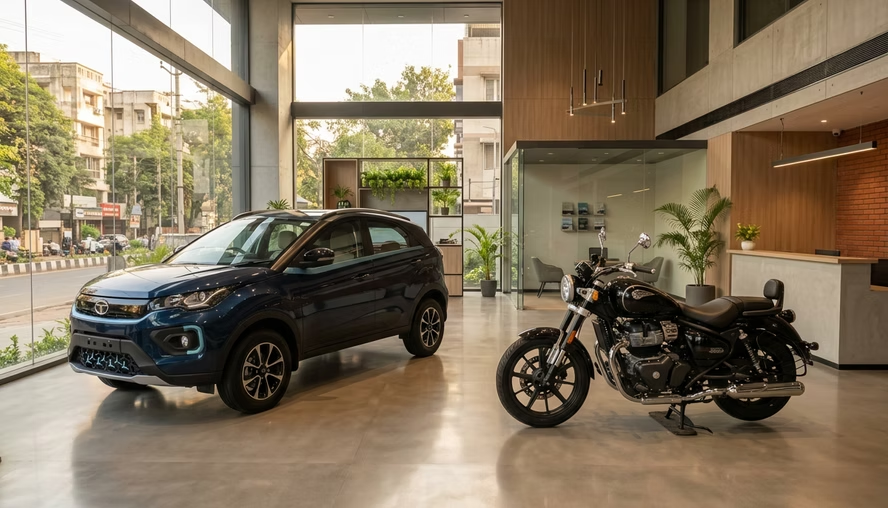
AI can help match the right vehicle to the right buyer at the right moment.
AI helps automotive sellers understand intent before the first conversation
Automotive sales teams often treat all leads in the same way. A web form enquiry, a missed call, a WhatsApp message, and a finance calculator visit may all enter the CRM as “new lead”. That hides the real story.
AI can read behaviour patterns and assign meaning to them.
A buyer who checks exchange value, EMI options, and diesel variants is likely in a different stage from someone browsing accessories. A rider comparing two 350 cc motorcycles may need help with performance, ride comfort, and ownership cost. A family looking at a seven-seater may care more about safety, boot space, and financing.
AI systems can group such signals into useful intent categories:
- High purchase intent: The buyer has compared variants, checked finance, requested a test drive, or returned multiple times.
- Research stage: The buyer is browsing models, reading specifications, and comparing body types or engine options.
- Price-sensitive buyer: The buyer spends time on discounts, exchange value, EMI, offers, or pre-owned alternatives.
- Feature-led buyer: The buyer interacts with safety, infotainment, performance, range, mileage, or connected features.
- Service-to-sales opportunity: An existing customer has an ageing vehicle, high service cost, or repeated repair history.
Once these groups are clear, sales teams can respond with better timing and better content. A high-intent buyer may need a same-day test drive slot. A price-sensitive buyer may need transparent EMI options. A current owner may need an upgrade offer that values their service loyalty.
This is where AI digital strategies for automotive sales begin to show real value. They help sellers stop guessing and start reading the buyer’s journey with more care.
Personalised marketing makes every enquiry more relevant
Personalisation is one of the most practical uses of AI in automotive sales. It does not mean sending a buyer’s name in a message and calling it personal. It means matching the offer, message, model, variant, and channel to the buyer’s actual needs.
For cars, personalisation may include:
- Recommending petrol, diesel, CNG, hybrid, or EV options based on driving patterns
- Showing SUV, hatchback, sedan, or MPV models based on browsing behaviour
- Suggesting variants that match budget and feature interest
- Sending finance examples based on down payment and EMI range
- Sharing exchange offers when a buyer already owns a similar segment vehicle
For bikes, personalisation can be even sharper because use cases vary widely. A college commuter, delivery rider, touring enthusiast, performance rider, and daily office commuter may all enquire about two-wheelers, but they do not need the same message.
AI can tailor recommendations around:
- Daily running distance
- Mileage expectations
- Riding comfort
- Engine capacity
- Service cost sensitivity
- City traffic use
- Long-ride interest
- Electric scooter charging access
A buyer looking at an electric scooter should not receive the same follow-up as someone comparing adventure bikes. One needs help with battery range, charging time, warranty, and running cost. The other may care about suspension, luggage options, tyre grip, and touring comfort.
Example of a personalised car journey
Imagine a dealership in Pune receives an enquiry for a compact SUV. The buyer has visited the same model page three times, used the EMI calculator, and checked automatic variants. The CRM flags the lead as high intent and budget-conscious.
Instead of sending a standard brochure, the system suggests:
- A message comparing the two most relevant automatic variants
- An EMI estimate with a practical down payment range
- Available colours in stock
- A test drive slot for the next day
- Exchange evaluation if the buyer has an older car
This feels helpful because it matches the buyer’s stage. The sales executive still handles the relationship, but AI prepares the ground.
Example of a personalised bike journey
A buyer in Bengaluru compares a 125 cc commuter bike with an electric scooter. AI can identify uncertainty around running cost. The follow-up can compare monthly fuel cost, charging needs, service intervals, and riding range in simple language.
That is more useful than pushing only the highest-margin model. Better relevance builds trust, and trust raises conversion.
Predictive analytics helps teams sell before demand cools
Predictive analytics uses past and current data to estimate what may happen next. In automotive sales, this can guide lead priority, stock planning, pricing decisions, and customer retention.
Many dealerships already have valuable data, but it sits in different places:
- CRM enquiries
- Website visits
- Test drive records
- Service history
- Finance approvals
- Call centre notes
- Walk-in logs
- Inventory movements
- Exchange valuations
- Lost leads
- Campaign responses
AI can connect this data and detect patterns that are hard to see manually.
For example, a dealership may find that buyers who take a test drive within 48 hours of enquiry have a much higher chance of booking. A predictive model can then give urgent priority to leads likely to convert if contacted quickly.
It may also show that certain hatchback enquiries rise before festive periods, while premium motorcycle enquiries grow after new launches and weekend ride events. That helps plan stock, staff, test ride slots, and finance partnerships.
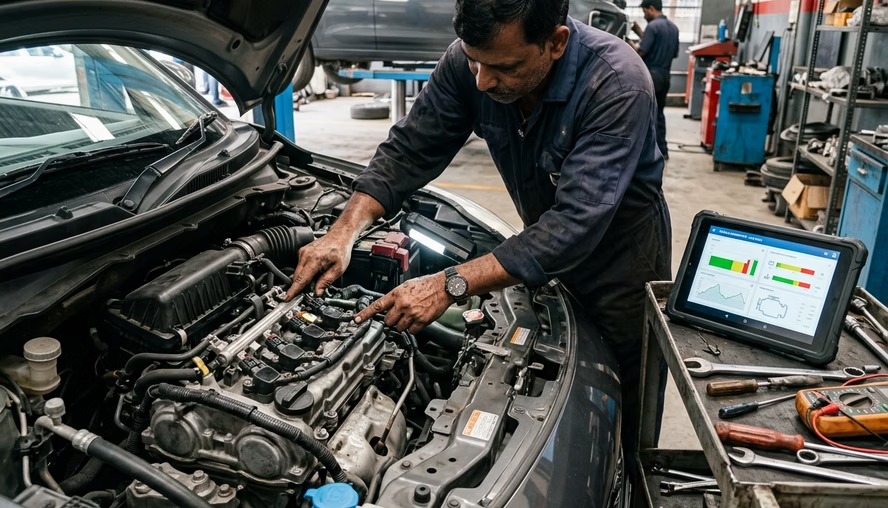
Service and sales data can reveal when an owner is ready to upgrade.
Lead scoring improves follow-up quality
Not every enquiry deserves the same level of urgency. A predictive lead score can rank prospects based on conversion likelihood.
Signals may include:
- Number of visits to model pages
- Time spent on variant comparisons
- Test drive request
- Finance calculator use
- Exchange evaluation request
- Location near dealership
- Prior service relationship
- Response to earlier messages
- Similarity to past converted buyers
The goal is not to ignore lower-scoring leads. The goal is to give sales teams a clear order of action. High-scoring leads may need a fast personal call. Lower-scoring leads may need useful educational messages until they show stronger intent.
Inventory planning becomes less reactive
Vehicle stock can make or break sales. If a dealership has too many slow-moving variants, cash gets blocked. If fast-moving colours or trims are unavailable, buyers may switch brands.
AI can support stock planning by studying:
- Local enquiry trends
- Seasonal demand
- Fuel type preference
- Colour movement
- Variant-level booking rates
- Competitor launch impact
- Delivery waiting periods
- Cancellation patterns
For two-wheelers, this can help predict demand for commuter bikes, scooters, performance motorcycles, and electric models across locations. A city market may need more automatic scooters and low-running-cost options. A highway-connected district may show better demand for touring bikes.
Upgrade prediction opens a hidden sales channel
Existing owners are often the best future buyers. AI can detect when someone may be ready to upgrade based on:
- Vehicle age
- Kilometres driven
- Service cost trend
- Warranty expiry
- Loan closure stage
- Previous model ownership
- New model launches in the same segment
A customer with a five-year-old compact sedan and rising maintenance bills may be open to a compact SUV upgrade. A scooter owner with high daily running may be ready for an EV. A premium motorcycle owner may respond well to touring accessories or a higher-capacity model.
This approach turns service data into a respectful sales opportunity. The timing matters. The message should feel useful, not intrusive.
Chatbots improve response speed and buying confidence
Automotive buyers ask many repeat questions. Some are simple. Some are emotional. Many happen outside showroom hours.
A good AI chatbot can answer common questions instantly and route serious buyers to a human sales executive. This reduces delay and keeps the buyer engaged when interest is fresh.
Chatbots can help with:
- Model availability
- On-road price estimates
- Variant comparison
- EMI ranges
- Test drive or test ride booking
- Dealer location and timings
- Exchange process
- Booking amount information
- Delivery timelines
- Service package details
- EV charging and battery questions
For India, WhatsApp-based chat is especially useful because many buyers prefer it over forms or email. A chatbot can collect basic context, share relevant details, and hand over the conversation with a summary.
A strong handover is critical. If the customer has already told the chatbot their budget, preferred model, and location, the sales executive should not ask the same questions again. Repetition makes the experience feel broken.
Effective chatbot design for cars and bikes
The best automotive chatbots are not long menus in disguise. They guide buyers through simple choices.
A useful flow may ask:
- Are you looking for a car, bike, scooter, or EV?
- What is your main use, family, commute, touring, delivery, city rides, or mixed use?
- What is your budget or EMI comfort range?
- Do you want a test drive or a quotation?
- Would you like finance or exchange support?
From there, the bot can recommend next steps rather than flood the buyer with links.
For car buyers, the bot can compare variants in plain language. For bike buyers, it can explain mileage, ride comfort, service intervals, and accessory options. For EV buyers, it can answer range, charging, battery warranty, and home charging questions.
Case example of chatbot-led conversion
Anonymised dealer groups across markets have used chatbots to handle after-hours enquiries. The pattern is consistent. When buyers receive instant answers and can book a test drive without waiting for a call-back, more enquiries move to the next step.
One two-wheeler dealer group could use a bot to handle evening enquiries for scooters and commuter bikes. The bot checks location, budget, licence status, and preferred test ride time. The next morning, the sales team receives a clean list of qualified prospects with appointment slots.
That does not replace the sales team. It removes repetitive work and lets people focus on closing, financing, exchange, and relationship-building.
Real-world examples show where AI works best
AI in automotive sales is not a theory. Several parts of the industry already use it in practical ways, even when buyers do not notice it directly.
Harley-Davidson dealership campaigns
A widely discussed example involved a Harley-Davidson dealership using an AI marketing platform to test many campaign messages and identify the audiences most likely to respond. The system helped prioritise better-quality leads and improve follow-up timing.
The larger lesson is not about one brand or one tool. Premium bike buyers often move through a long consideration cycle. AI can help identify which riders are browsing casually and which ones show signs of serious interest.
For motorcycle dealers, this can guide when to offer a test ride, when to share finance plans, and when to invite a buyer to a ride event.
Online used-car platforms
Digital-first used-car platforms have shown how data can improve buying confidence. Many such platforms use data-led pricing, inspection inputs, image checks, buyer preferences, and demand patterns to match vehicles with shoppers.
For the buyer, this means clearer information. For the seller, it means faster matching and fewer wasted enquiries.
The same thinking applies to new car and bike dealerships. Better data helps answer questions buyers already have:
- Is the price fair?
- Is this variant available?
- What will the EMI look like?
- Can I exchange my old vehicle?
- How soon can I get delivery?
- Which option fits my actual use?
Connected vehicle and service data
OEMs and dealers increasingly work with connected vehicle data, service records, and ownership behaviour. When used with consent and care, this data can improve both service and sales.
For example, a car owner who often drives long distances may value an upgrade with better safety features and comfort. A scooter owner with heavy daily use may respond to lower running cost options. A motorcycle owner with touring accessories may be interested in a new adventure model.
The key is relevance. AI should help the brand understand the customer’s needs, not overwhelm them with constant offers.
Build AI into the sales process without losing the human touch
AI works best when it supports people. Automotive buying still involves emotion, trust, family input, negotiation, finance, and after-sales confidence. A bot or algorithm cannot replace a skilled sales consultant.
The right model is a blend.
AI can:
- Read buyer behaviour
- Prioritise leads
- Recommend next best action
- Answer simple questions
- Predict demand
- Personalise messages
- Flag upgrade opportunities
Sales teams can:
- Build trust
- Handle objections
- Explain trade-offs
- Offer test drive support
- Guide finance decisions
- Manage delivery experience
- Strengthen long-term loyalty
Start with clean data and one clear goal
Many AI projects fail because the data is messy or the goal is vague. A dealership does not need to start with an expensive full-scale system. It can begin with one high-value use case.
Good starting points include:
- Faster response to web and WhatsApp leads
- Better test drive conversion
- Lead scoring for sales teams
- Personalised follow-up by model and budget
- Upgrade campaigns for existing customers
- Stock prediction for fast-moving variants
Start small, measure clearly, then expand.
| AI use case | What to measure |
|---|---|
| Chatbot enquiries | Response time, qualified leads, test drive bookings |
| Lead scoring | Contact rate, booking rate, conversion rate |
| Personalised messages | Reply rate, showroom visits, quotation requests |
| Predictive inventory | Stock ageing, lost sales, variant availability |
| Upgrade campaigns | Service-to-sales leads, exchange enquiries, repeat purchases |
Keep privacy and consent at the centre
AI depends on data, and automotive data can be sensitive. Brands must handle it responsibly.
A sound approach includes:
- Clear consent for communication
- Easy opt-out options
- Limited access to customer data
- Secure CRM practices
- No use of personal data beyond stated purpose
- Human review for important decisions like finance discussions
Trust is a sales asset. Poor data practices can damage it quickly.
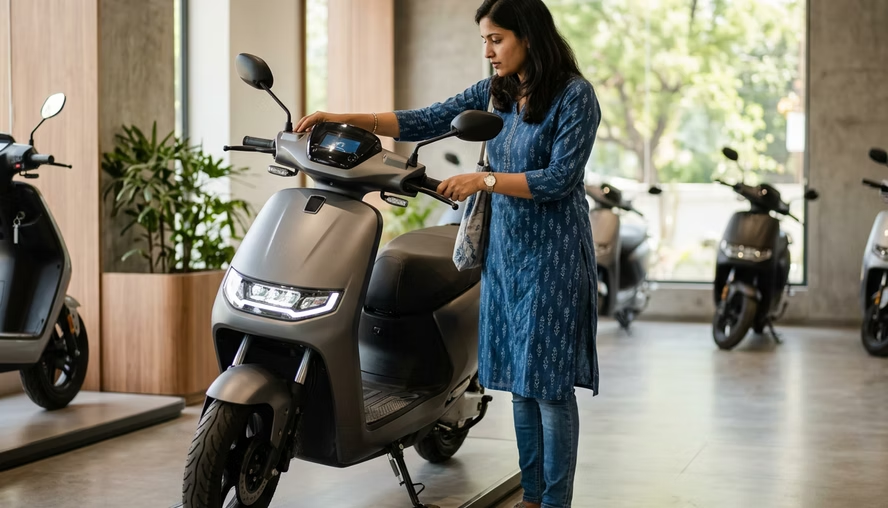
AI can make the buying journey easier for EV and scooter customers.
The road ahead belongs to smarter, more helpful selling
AI is changing automotive sales because buyers have changed first. They research more, compare more, and expect faster answers. Cars and bikes are still emotional purchases, but the path to purchase is now shaped by data, digital touchpoints, and timely guidance.
The most effective AI strategies are practical:
- Personalise recommendations by use case, budget, and intent
- Use predictive analytics to prioritise leads and plan stock
- Add chatbots where speed and availability matter
- Learn from service and ownership data to support upgrades
- Keep human sales teams at the centre of the experience
Automotive businesses that use AI well will not sound more mechanical. They will feel more responsive, more relevant, and easier to buy from. That is what helps turn interest into test drives, test rides, bookings, and long-term customer relationships.